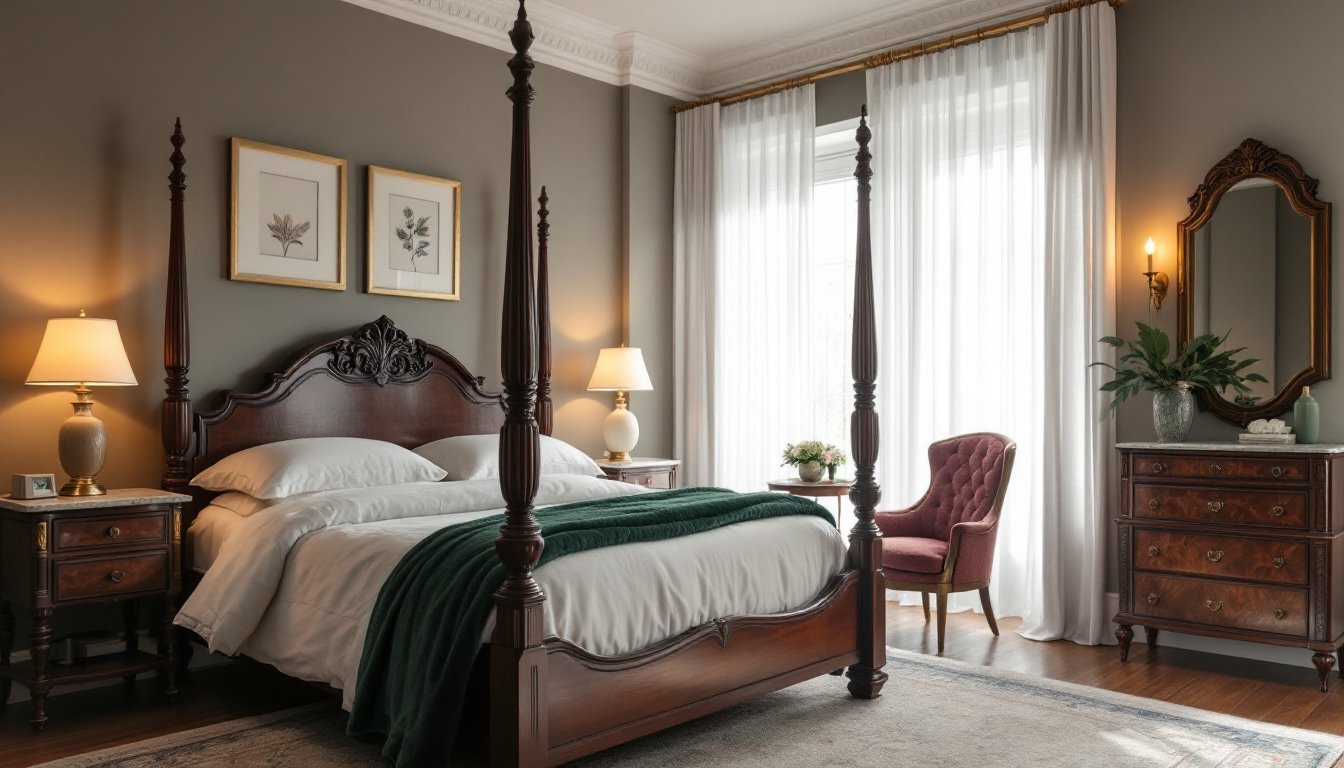
Victorian bedroom furniture brings a sense of refined sophistication and romantic charm to any home. Whether you’re drawn to ornate carved details, rich wood tones, or the grandeur of a four-poster bed, Victorian style offers timeless appeal that works in both period homes and modern spaces. This guide walks you through the defining characteristics of Victorian furniture, essential pieces to consider, and practical strategies for building a Victorian bedroom on any budget, without sacrificing authenticity or very costly.
Table of Contents
ToggleKey Takeaways
- Victorian bedroom furniture is defined by hand-carved details, rich wood tones like mahogany and walnut, ornamental feet, and upholstered pieces in jewel-toned fabrics—creating a sense of refined sophistication that works in both period and modern homes.
- A properly scaled statement bed frame is the visual anchor of any Victorian bedroom; choose between full, queen, or king sizes based on room dimensions, and prioritize quality joinery like mortise-and-tenon joints for longevity.
- You can achieve authentic Victorian style on any budget by starting with one quality statement piece and building gradually with reproductions, which cost 30–50% less than antiques while delivering identical visual impact.
- Mix Victorian furniture with modern décor by using neutral wall colors, contemporary lighting, and clean-lined accessories; pair dark wood frames with crisp white linens and minimal nightstands to avoid a museum-like feel.
- Essential storage pieces like tall wardrobes, dressers with ornate mirrors, and dressing tables were historically crucial to Victorian bedrooms and remain functional focal points in modern homes short on closet space.
- When sourcing Victorian bedroom furniture, check proportions relative to your room size, evaluate joinery methods in person, and budget an additional 20–30% for restoration work on authentic pieces from estate sales or antique shops.
What Defines Victorian Bedroom Furniture
Victorian furniture, produced primarily between 1837 and 1901 during Queen Victoria’s reign, is defined by several unmistakable hallmarks. Expect to see hand-carved details, turned spindles, cabriole legs, and decorative inlays that reflect the era’s embrace of ornamentation and craftsmanship.
Most Victorian pieces feature rich woods like mahogany, walnut, or rosewood, often with a deep patina or dark finish that adds gravitas to a room. Upholstered elements, armchairs, footstools, and bed frames, typically showcase damask, velvet, or brocade fabrics with bold jewel tones: deep burgundy, forest green, or sapphire blue.
Unlike minimalist modern design, Victorian style celebrates visual richness. Furniture pieces often have substantial proportions, ornamental feet, and visible joinery that signals quality construction. The approach feels purposeful, never sparse, but shouldn’t tip into clutter if you’re thoughtful about curation. When sourcing pieces, look for proportional scale relative to your room’s size, an oversized Victorian wardrobe can overwhelm a modest bedroom, while undersized pieces look lost in a generous space.
Authentic Victorian furniture commands investment-grade prices, but solid reproductions capture the aesthetic effectively at a fraction of the cost. The key difference lies in hand-carving versus machine-molded details and wood species used for visible surfaces versus hidden frame components.
Essential Victorian Bedroom Pieces to Consider
The Statement Bed Frame
The bed is your visual anchor. A properly scaled Victorian bed frame sets the tone for the entire room, consider it a non-negotiable centerpiece. Full-size (54″ × 75″) or queen (60″ × 80″) frames work for most residential bedrooms: king-size Victorian beds (76″ × 80″) require dedicated master suites to avoid overwhelming the space.
Look for cast-iron or solid wood frames with turned posts, ornamental headboards, and decorative footboards. Four-poster designs with carved finials command immediate attention, while sleigh beds (curved headboard and footboard resembling a sleigh) offer Victorian elegance without towering height. Platform beds don’t suit the style: Victorian beds historically sat on a substantial box spring or slat base that added visual heft.
When comparing options, check the joinery method. Mortise-and-tenon joints (where a projecting piece slots into a receiving cavity) indicate quality construction and longevity. Stapled or screwed joints suggest budget reproductions that may need reinforcement over time.
Dressers, Wardrobes, and Storage
Victorian bedrooms relied on tall wardrobes, chests-of-drawers, and dressing tables for storage, closet space wasn’t standard during the era. A proper dresser should feature a mirror (typically taller, often arched or ornately framed) and substantial drawer capacity with quality drawer slides or traditional dovetail joinery.
Wardrobe armoires or free-standing closets work beautifully as functional focal points, especially in modern homes short on built-in closet space. These pieces often include mirrored doors, adjustable shelving, and carved rails. When sizing wardrobes, measure doorways and hallways first, many vintage pieces are too wide to move into upper-floor bedrooms without dismantling.
A dressing table with a low mirror, multiple drawers, and decorative legs creates an authentic Victorian vanity. If budget is tight, pairing a simple desk with an ornate mirror achieves similar visual impact. Discount Bedroom Furniture: Transform your space affordably while maintaining period aesthetics. Nightstands should echo the bed frame’s style, look for marble tops, turned legs, and single or double drawer configurations that complement your chosen bed.
Styling Your Victorian Bedroom on Any Budget
You don’t need to spend a fortune to capture Victorian charm. Start with one statement piece, typically the bed frame, and build around it over time. Reproduction Victorian furniture from mainstream retailers often costs 30–50% less than authentic antiques while delivering identical visual impact.
Secondary pieces don’t all need to match perfectly. A mahogany dresser paired with a walnut nightstand still reads as cohesive if both feature period-appropriate details and finishes. Mix old and new: a Victorian bed frame with modern bedding, contemporary lighting, and sleek curtain rods creates intentional contrast rather than museum-like stiffness.
Fabric choices dramatically affect perceived value. High-thread-count cotton sateen (300+TC minimum) or linen blends outperform cheaper polyester for both durability and visual quality. Aim for layered bedding: a quality duvet, coordinating throw pillows in complementary fabrics, and a folded throw across the foot of the bed add depth without excess.
Bedroom Furniture Near Me: Discover local showrooms and antique shops where you can evaluate proportions and finishes in person. Many Victorian pieces require refinishing or reupholstering, budget an additional 20–30% for restoration work. Estate sales, online auction sites, and consignment shops offer steep discounts on authentic pieces if you’re patient. Avoid furniture with active woodworm, structural cracks, or water damage: restoration costs quickly exceed replacement value.
Mixing Victorian Furniture With Modern Decor
Modern bedrooms benefit from Victorian anchors balanced with contemporary elements. The trick is avoiding a period room that feels frozen in time. Start by choosing a neutral wall color, soft whites, warm grays, or muted sage allow Victorian furniture to dominate visually without competing.
White Bedroom Furniture: Transform your aesthetic with cream or ivory bedding and accessories that let ornate wood frames breathe. Pair a dark mahogany Victorian bed with crisp white linens and minimal nightstands for clean-lined contrast. Add modern reading lamps with simple bases, avoid ornate brass fixtures that muddy the intentional mix.
Window treatments should respect both styles. Heavy brocade curtains look authentic but can feel dated: instead, choose linen or linen-cotton blend panels in deep jewel tones paired with understated hardware. Sheer white curtains underneath add airiness while maintaining period-appropriate layering.
Artwork and accessories bridge the gap smoothly. Botanical prints in simple frames, contemporary landscape paintings, or abstract pieces complement Victorian frames without competing for attention. Keep decorative objects minimal, a few meaningful pieces scattered on the dresser reads more sophisticated than a cluttered display.
Lighting deserves careful attention. Victorian rooms historically featured gas lamps and candlelight: today’s equivalent is warm-toned (2700K) LED bulbs in fixtures with simple modern design. Avoid harsh overhead lighting: instead, layer ambient light with bedside reading lamps and perhaps a floor lamp in a corner. Black Bedroom Furniture: Elevate your space with dark Victorian pieces by balancing them with bright walls, generous natural light, and modern textiles that prevent the room from feeling heavy or oppressive.
Conclusion
Victorian bedroom furniture endures because it celebrates beauty, craft, and personal comfort simultaneously. Whether you invest in authentic pieces or thoughtfully curated reproductions, the key lies in honoring the style’s defining characteristics, ornate details, rich materials, and proportional design, while adapting them to your modern lifestyle. Start with a quality bed frame, add functional storage pieces, and layer in contemporary elements for a bedroom that feels both timeless and genuinely livable. Bedroom Furniture: Transform your retreat with pieces that balance Victorian elegance and everyday practicality.