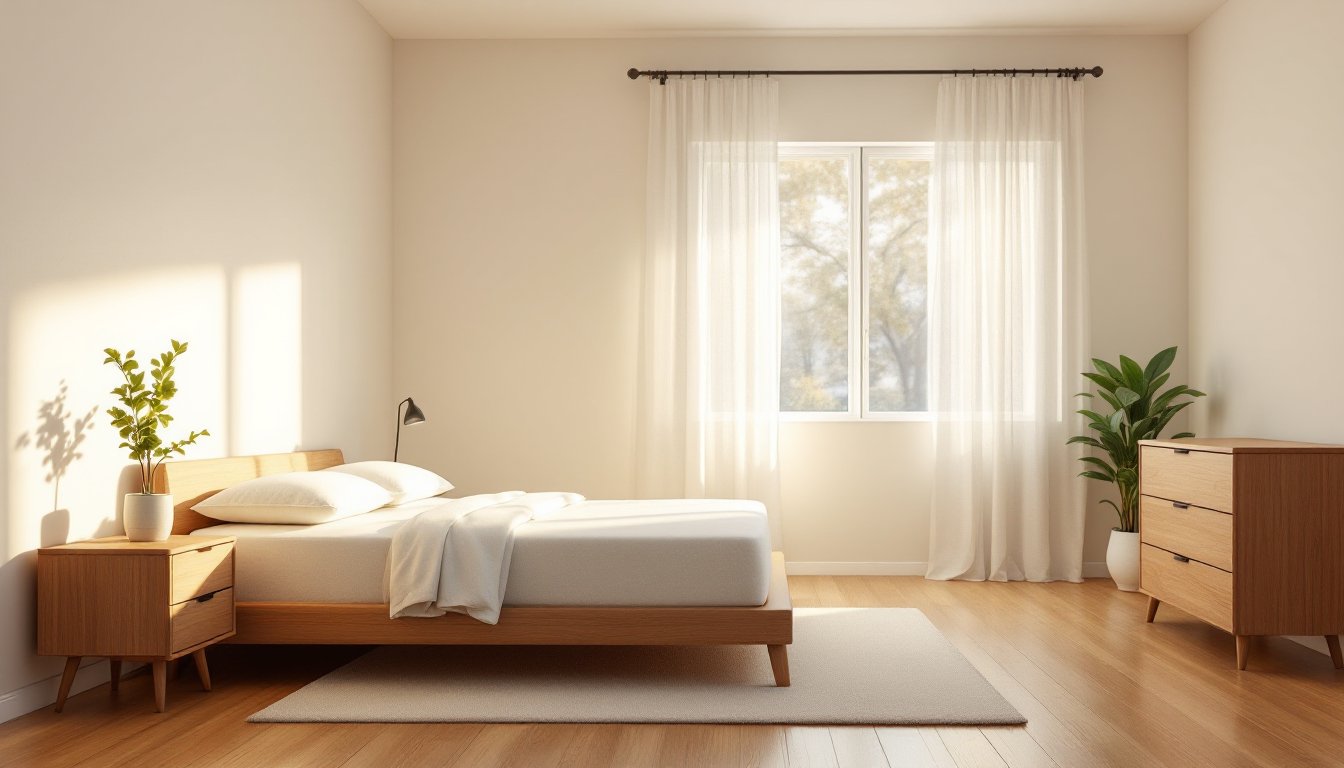
Most people spend about a third of their lives sleeping, yet they rarely consider what their <a href="https://twinpalmsrl.com/discount-bedroom-furniture/”>bedroom furniture is off-gassing into the air they breathe. Non-toxic bedroom furniture has become essential for homeowners concerned about indoor air quality and long-term health. Conventional bedroom pieces, mattresses, dressers, nightstands, are often treated with flame retardants, formaldehyde-based adhesives, and synthetic finishes that release volatile organic compounds (VOCs) for months or even years after purchase. This guide walks you through identifying harmful chemicals in standard furniture, selecting genuinely safe alternatives, and understanding certifications that actually matter when building a healthy bedroom.
Table of Contents
ToggleKey Takeaways
- Non-toxic bedroom furniture eliminates harmful off-gassing from formaldehyde, flame retardants, and VOCs that accumulate during the 7–9 hours you sleep nightly, reducing respiratory irritation and improving long-term health outcomes.
- Look for third-party certifications like GOTS, OEKO-TEX Standard 100, and Greenguard Gold when selecting non-toxic bedroom furniture, as vague labels like ‘eco-friendly’ or ‘natural’ lack independent verification.
- Prioritize natural latex cores, GOTS-certified organic cotton covers, and solid hardwood frames for mattresses and beds instead of polyurethane foam, synthetic latex, and particleboard bonded with urea-formaldehyde resin.
- Safe dressers and nightstands are made from solid wood with water-based or plant-based finishes and formaldehyde-free plywood bonded with soy-based adhesives, costing 15–30% more but eliminating primary sources of VOCs.
- Expect to invest 50–100% more for genuinely non-toxic bedroom furniture, with queen-size organic latex mattresses typically ranging $1,500–$3,000 from transparent brands that provide material specifications and certifications.
- Avoid synthetic fabrics, polyurethane topcoats, and stain-resistant chemical finishes like Scotchgard (containing persistent PFCs), and instead choose tightly woven natural fibers like linen and wool that naturally resist staining without toxic treatments.
Why Non-Toxic Bedroom Furniture Matters for Your Health
Your bedroom is where your body spends roughly 7–9 hours nightly in close proximity to furniture, bedding, and finishes. The chemicals in conventional furniture don’t just sit inert on the surface, they migrate into the air you breathe, a process called off-gassing. Formaldehyde, used in particleboard adhesives and wood finishes, is classified as a probable carcinogen and can trigger respiratory irritation, headaches, and allergic reactions even at low concentrations.
For families with children, pregnant women, and anyone with respiratory sensitivities, the stakes feel even higher. Flame retardant chemicals (like brominated and chlorinated compounds) were once standard in mattress padding and upholstery: many of these have been linked to endocrine disruption and developmental issues. Meanwhile, dust from worn upholstery and particleboard can accumulate, carrying chemical residues into your lungs night after night.
Choosing non-toxic bedroom furniture isn’t just a wellness trend, it’s a practical decision to reduce your family’s daily chemical exposure during the hours when your defenses are lowest. Better sleep quality, fewer headaches, and reduced respiratory inflammation are real benefits reported by people who’ve made the switch. When building your bedroom, starting with kids bedroom furniture designed for safety can set a healthy foundation for the entire household.
Understanding Hidden Chemicals in Conventional Bedroom Furniture
Common Toxic Materials Found in Beds and Mattresses
Most budget and mid-range mattresses start with polyurethane foam cores, which off-gas toluene diisocyanate (TDI) and volatile organic compounds for weeks after unboxing. Many still use synthetic latex or foam treated with antimicrobial and flame-retardant chemicals. Innerspring coils are typically wrapped in fabric covers bonded with formaldehyde-based glues. Mattress covers themselves often contain flame retardants like polybrominated diphenyl ethers (PBDEs), which bioaccumulate in your body over time.
Box springs and platform beds frequently use low-grade particleboard or plywood bonded with urea-formaldehyde resin, which off-gases more aggressively than phenol-formaldehyde alternatives. Upholstered bed frames add another layer: fabric backing glued with adhesives containing volatile solvents, and padding saturated with flame-retardant chemicals.
Harmful Substances in Wood Finishes and Upholstery
Wood-stain finishes on dressers and nightstands typically contain high levels of VOCs from toluene, xylene, and formaldehyde. Even “low-VOC” finishes available at major retailers often still release measureable off-gassing for 6–12 months. Polyurethane topcoats are particularly potent culprits. Upholstered dressers and padded headboards use synthetic fabrics (polyester, polyacrylic) treated with stain-resistant finishes like Scotchgard, which contains perfluorinated compounds (PFCs), persistent chemicals that don’t break down in your body or the environment.
Fabric glues and foam adhesives in upholstered pieces release formaldehyde and other aldehydes. The deeper the padding, the more foam adhesive is typically used. Even “eco-friendly” upholstery fabrics can carry residual dyes and chemical treatments if not explicitly certified organic and naturally dyed.
How to Choose Non-Toxic Beds and Mattresses
Start by checking certifications: Global Organic Textile Standard (GOTS), OEKO-TEX Standard 100, and Greenguard Gold are legitimate third-party verifications that test for harmful chemicals and heavy metals. A mattress labeled “organic” without certification is largely meaningless: GOTS certification guarantees the cotton, wool, or other fibers are grown without synthetic pesticides and processed without hazardous chemicals.
For the core, prioritize natural latex (from the Hevea tree) rather than synthetic latex or polyurethane foam. Real latex is naturally antimicrobial and bouncy, though it does still require some processing. Dunlop and Talalay are the two main latex processing methods: Talalay is slightly more refined but both can meet non-toxic standards when certified. Avoid “latex blend” or “latex-feel” mattresses, these often contain mostly polyurethane.
Upholstery and covers should be GOTS-certified organic cotton, linen, or wool. Wool is naturally fire-retardant, so manufacturers can skip chemical flame retardants. Avoid synthetic “breathable” covers, they’re usually microfiber with PFC stain treatments. For the foundation, look for solid wood frames or solid wood + high-density hardwood plywood, never particleboard or MDF (medium-density fiberboard). Some manufacturers now offer IKEA bedroom furniture hacks and alternatives using formaldehyde-free plywood, which is increasingly available at supply yards if you’re building your own base.
Expect to pay 50–100% more for a genuinely non-toxic mattress. A queen-size organic latex mattress with certified cotton covers typically runs $1,500–$3,000 from brands that prioritize transparency. Cheaper “natural” mattresses often hide synthetic cores or untested materials, ask for material specifications and certifications before committing.
Safe Materials for Bedroom Dressers, Nightstands, and Storage
The safest dressers and nightstands are solid wood, oak, maple, walnut, or sustainably sourced tropical hardwoods like FSC-certified teak. Solid wood doesn’t require adhesives between layers the way plywood and particleboard do, and hardwood finishes can be applied with low-toxicity or plant-based sealers. Check whether the wood has been kiln-dried and properly acclimated to your region’s humidity: this prevents warping and reduces the need for excessive finishing coats.
If using plywood, insist on formaldehyde-free (or ultra-low-formaldehyde) plywood bonded with soy-based or phenol-formaldehyde adhesives. Some builders and manufacturers now specify “F-star” rated plywood with European emission standards far stricter than U.S. requirements. This costs 15–30% more than standard plywood but eliminates the primary source of VOCs in composite pieces.
For finishes, avoid polyurethane and conventional stains. Instead, look for water-based polyurethane, hard-wax oils (linseed or tung oil-based), or natural tung and linseed oils that cure with minimal chemical smell. These take longer to cure and require more maintenance, but off-gassing drops dramatically. Some DIYers building custom pieces use food-grade mineral oil or beeswax finishes for drawers and surfaces that won’t receive heavy wear.
Upholstered drawer fronts or padded headboards should use GOTS-certified organic cotton batting instead of polyurethane foam. If foam is necessary, ask for soy-based or natural latex foam without flame retardant chemicals. Avoid fabric with stain-resistant coatings: choose durable, tightly woven natural fibers instead. Linen and wool naturally resist staining and aging better than synthetic fabrics anyway.
Certifications and Labels That Guarantee Non-Toxic Standards
Not all green labels are created equal. GOTS (Global Organic Textile Standard) is the gold standard for organic fabrics, textiles, and fibers. It covers fiber growth, processing, manufacturing, and labeling, if a mattress cover or upholstery carries GOTS certification, you can trust the fiber source. OEKO-TEX Standard 100 tests finished textiles for over 300 harmful substances and heavy metals: it doesn’t certify organic materials, but it does guarantee the final product is free of regulated toxins.
Greenguard Gold is a rigorous certification that tests off-gassing, dust, and VOC emissions from furniture in real-world conditions. It’s particularly useful for mattresses and upholstered pieces because it simulates long-term off-gassing in a sealed chamber. Greenguard Certified (the baseline level) is less stringent: always look for “Gold” if the option exists.
FSC (Forest Stewardship Council) certification on wood ensures the timber comes from responsibly managed forests, not clearcut operations. This is important for hardwood dressers and nightstands. Cradle to Cradle Certified evaluates a product’s entire lifecycle, materials, manufacturing, use, and end-of-life, but it’s relatively rare on bedroom furniture.
Beware of vague labels like “eco-friendly,” “natural,” “green,” or “low-VOC” without third-party backing. Manufacturers can print these claims without independent verification. Ask for a certificate, test report, or technical data sheet, legitimate brands provide them. Many also publish their material sourcing and chemical testing publicly on their websites. Local bedroom furniture stores may carry certified options or can special-order from brands with transparent practices.
If you’re building custom pieces, research adhesives and finishes directly. Formaldehyde-free plywood, soy-based polyurethane, and water-based stains are increasingly available at specialty lumber yards and online suppliers. Some DIY enthusiasts reference IKEA hackers and The Handyman’s Daughter for creative solutions using standard components swapped with safer materials.