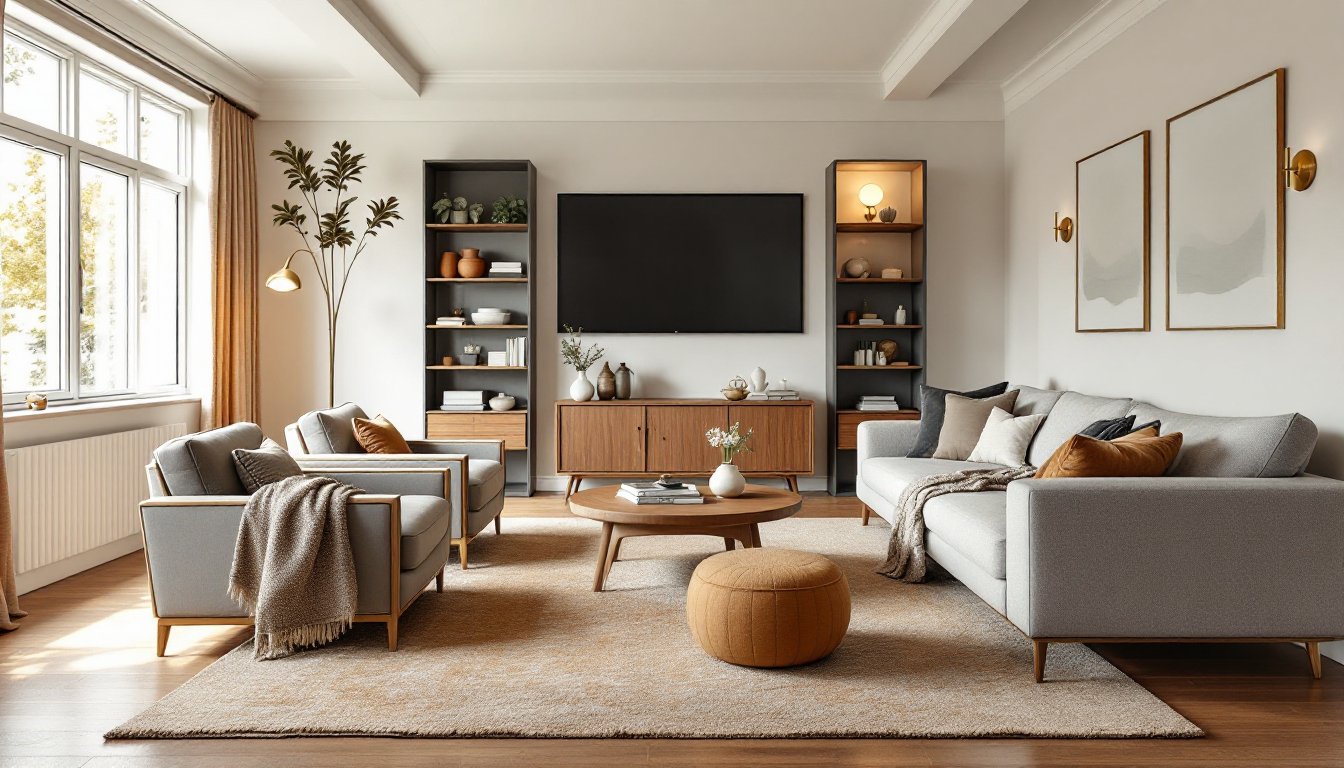
A well-arranged living room is the backbone of a functional home. It’s where comfort meets daily life, a space that should feel intuitive to move through, invite conversation, and reflect how your family actually lives, not just how it looks on Instagram. The difference between a cramped, awkward room and one that flows beautifully often comes down to smart furniture placement, not budget or square footage. This guide walks through the practical steps to assess your space, identify focal points, choose the right layout, and balance scale and proportion. Whether you’re starting from scratch or rearranging what you already have, these fundamentals will help you create a living room that works as hard as you do.
Table of Contents
ToggleKey Takeaways
- Measure your living room dimensions, furniture, and pathways before arranging—accurate spacing prevents costly mistakes and ensures proper leg room between seating and tables.
- Identify a clear focal point like a fireplace, window, or TV, then orient your seating arrangement toward it to create purpose and guide all furniture placement decisions.
- Arrange seating in a U or L shape facing the focal point rather than a straight line to encourage conversation and make better use of your living room furniture layout.
- Balance furniture scale to your room size: choose compact pieces for spaces under 150 square feet and larger sectionals for spacious rooms to avoid visual discord.
- Layer your design with multiple light sources, mixed textures, and functional pieces like rugs and credenzas to create visual interest and prevent the room from feeling sparse.
- Maintain traffic flow by leaving at least 30 inches of clearance for main pathways and avoiding walls-only furniture arrangement, which makes rooms feel smaller and awkward to navigate.
Assess Your Space and Measure Everything
Before moving a single piece of furniture, grab a tape measure and document your room’s dimensions. Measure the length and width of your living room, the height of the ceiling, and note where doors, windows, and heating vents sit. Sketch a rough floor plan on paper or use a free online tool, even a simple overhead drawing helps immensely.
Identify architectural features that affect layout: doorways (you need a clear path through), windows (seating placement matters for natural light and views), and any built-ins like fireplaces or shelving. Check ceiling height if you plan tall bookcases or wall-mounted shelves: eight feet is standard, but older homes may run lower.
Measure your existing furniture or pieces you’re considering. Write down exact dimensions, sofa depth, armchair width, coffee table height (standard is 16–18 inches, roughly the same height as your sofa seat). This prevents the common mistake of picking a beautiful chair that’s too deep for the space or a coffee table you can’t walk around. Account for leg room: most designers recommend 18–24 inches between a sofa and a coffee table so you can actually move your legs while sitting.
Identify Your Room’s Focal Point
Every room needs at least one focal point, an anchor that furniture naturally orients toward. This is usually a fireplace, a large window with a view, or a wall-mounted TV. If your room has a fireplace, it’s often the natural choice. Without one, a picture window or a feature wall works just as well.
Arrange your primary seating (sofa, chairs, sectional) to face or angle toward this focal point. If you have a TV, mount it at eye level when seated, roughly 42–55 inches from the floor is standard for most viewing distances. Don’t put the TV in the corner just because it “fits”: viewers end up turning their heads or necks awkwardly.
Some rooms lack an obvious focal point, especially open floor plans. In that case, create one: hang a large piece of art, install floating shelves, or use a bold accent wall. A well-defined focal point gives the entire room purpose and makes furniture placement decisions clearer.
Choose the Right Furniture Layout
Conversation Area Setup
The arrangement of your seating sets the tone for the entire room. Position your sofa to face the focal point, then angle secondary seating (armchairs, accent chairs) to create a conversation zone. Furniture should form a rough “U” or “L” shape rather than a straight line facing the TV, this encourages face-to-face interaction, which is why it’s called a conversation area.
Place pieces about 8 feet apart: closer feels intimate, further apart makes conversation harder. A small to mid-size coffee table anchors the center, grounding the layout. If space is tight, a console table or ottoman with a tray works as a functional alternative.
Consider symmetry where it makes sense. Two matching armchairs on either side of a sofa feel balanced and intentional. Asymmetrical layouts (one chair, one bench, a side table) can feel more relaxed and modern, but require more intentional visual balance through scale and color.
Traffic Flow Considerations
Living spaces must remain walkable. Identify your natural traffic paths: from the entry to other rooms, from the sofa to the kitchen, from the door to a window. Furniture should frame these paths, not block them. A common mistake is pushing everything against the walls to “maximize” space: this actually makes rooms feel smaller and awkward to navigate.
Leave at least 30 inches of clearance for a main pathway. Arrange seating to define the space without creating bottlenecks. If your room is open-plan, use furniture placement to subtly divide zones, sofa back to the dining area, a bookcase to separate living from kitchen, without literal walls. Check that no furniture blocks sightlines: you shouldn’t have to squeeze past a chair to reach the window.
When moving large pieces like a sectional or sofa, measure doorways and hallways first. A beautiful 8-foot sectional won’t help if it won’t fit through the entry. Measure height, width, and depth, and account for diagonal rotation if needed.
Balance Furniture Scale and Proportion
A living room arranged with poor scale looks off, a tiny love seat in a large room or an oversized sectional in a small one both create visual discord. Match furniture scale to room size and ceiling height. In rooms under 150 square feet, choose compact seating (love seat plus chairs, smaller sectional) to avoid drowning the space. In larger rooms, go bigger: a full sectional, a substantial sofa with two chairs, or even a sectional with a chaise works better.
Ceiling height matters too. High ceilings (9+ feet) can handle taller bookcases and wall art without feeling cramped. Low ceilings (under 8 feet, common in basements or older homes) benefit from lower-profile furniture, a lower-slung sofa, floating shelves instead of tall units.
Mix shapes and heights to avoid monotony. If your sofa is low and long, pair it with a tall floor lamp or bookcase. A squat ottoman works visually with slender legs. Avoid clustering identically sized pieces, alternate a high-backed chair with a low side table, a tall credenza with low-profile seating. This variation keeps your eye moving and makes the room feel intentional, not default.
When arranging, stand back and squint. Does the room feel balanced? Do heavy pieces (sofa, credenza) feel evenly distributed, or is one wall drowning in furniture while another feels bare? Rearrange until the weight feels right.
Create Visual Interest With Layering
A furnished living room isn’t just furniture, it’s layers of function, color, texture, and light. These elements prevent the space from feeling sterile or incomplete. Start with anchors (sofa, chairs), then add secondary layers.
Lighting is critical and often overlooked. A single overhead fixture casts harsh shadows and feels cold. Layer in table lamps (flanking a sofa or on side tables), a floor lamp in a reading corner, and ambient mood lighting like wall sconces. Aim for three different light levels: bright for task work, soft for evening, adjustable for flexibility.
Texture matters as much as color. A smooth leather sofa needs a woven throw blanket, a nubby rug, and perhaps a soft linen chair. Solid walls benefit from patterned pillows or a textured wallpaper accent. Modern design resources like MyDomaine showcase how layered textures create depth in small and large spaces alike.
Add functional decor: a console table behind the sofa, a credenza for storage, a bookcase for display and organization. These pieces serve double duty, they store stuff and break up large wall space. A sectional sofa arrangement often feels enhanced by apartment living ideas that show how to zone spaces without walls.
Incorporate a rug to define the seating area. Choose one large enough that at least the front legs of your sofa sit on it (not just the back legs touching the edge). A typical living room rug runs 5×8 or 8×10 feet. The rug anchors the furniture grouping and adds warmth underfoot. When considering modern design direction, Dwell’s design inspiration demonstrates how thoughtful rug and furniture placement defines contemporary living spaces.
Finally, don’t cram. Negative space, empty wall, clear coffee table surface, blank corner, is as important as what you fill it with. A room that breathes feels larger and more luxurious than one stuffed tight.