Hanamint patio furniture has earned its reputation as a premium choice for homeowners who demand durability, style, and function in their outdoor spaces. Whether you’re furnishing a modest backyard deck or an expansive patio, Hanamint delivers solid craftsmanship that withstands seasonal weather without sacrificing aesthetics. This guide walks you through what makes Hanamint stand out, their collection options, material durability, and how to integrate these pieces into your outdoor design, plus practical maintenance tips to keep your investment looking sharp for years.
Table of Contents
ToggleKey Takeaways
- Hanamint patio furniture combines premium cast aluminum frames and solution-dyed acrylic fabrics to resist rust, fading, and weather damage for 10+ years of durability.
- Choose modern collections for contemporary aesthetics with clean lines and neutral finishes, or traditional options for ornamental designs that suit classic home architecture.
- Proper maintenance—including seasonal cushion cleaning, monthly frame wiping, and annual fastener inspections—keeps your Hanamint investment looking sharp with minimal effort.
- Coordinate Hanamint pieces with your patio’s existing materials: pair modern designs with concrete and geometric accents, or traditional collections with stone and brick patios.
- For coastal or high-humidity climates, verify that fasteners are stainless steel before purchasing, as hardware quality matters more than frame material for long-term rust resistance.
What Is Hanamint Patio Furniture and Why It Stands Out
Hanamint specializes in high-end outdoor furniture engineered for both residential and commercial applications. The brand builds pieces using cast aluminum frames and weather-resistant materials designed to resist rust, fading, and structural degradation in harsh climates. Unlike mass-market patio sets, Hanamint furniture is constructed with heavier gauge materials and joinery that prioritizes longevity over price-point competition.
The brand’s reputation stems from meticulous attention to detail: cushioned seating options use solution-dyed acrylic fabrics that resist color loss, frames are finished with powder-coating systems that protect against oxidation, and design aesthetics range from minimalist modern to ornate traditional. Homeowners choose Hanamint when they’re willing to invest upfront for pieces that’ll outlast cheaper alternatives by a decade or more. The company also backs its craftsmanship with warranties that reflect confidence in durability, typically 5–10 years depending on the collection.
Hanamint’s Top Collections and Styles
Modern and Contemporary Designs
Hanamint’s modern collections favor clean lines, minimalist frames, and geometric silhouettes that complement contemporary home architecture. Pieces like their Mayfair and St. Moritz collections feature slatted aluminum seats, low-profile arms, and stackable or modular configurations, useful when storage or flexible entertaining matters. These designs pair well with concrete patios, steel fire tables, and landscaping with ornamental grasses. Modern Hanamint pieces tend toward neutral color palettes: matte black, natural aluminum finishes, or satin bronze.
Classic and Traditional Options
Traditional Hanamint collections emphasize ornamental casting, curved frames, and decorative details inherited from Victorian or Mediterranean design language. Collections such as Grand Tuscany or Bergamo feature elaborate arm details, cushioned seating with patterned fabrics, and dining sets with pedestal bases. These pieces suit traditional homes, brick or stone patios, and yards with flowering borders or formal landscaping. Color options expand here, classic greens, deep browns, cream, and jewel tones appear alongside neutral finishes.
Both style families integrate similarly durable materials and construction methods: the difference is purely aesthetic preference and how pieces coordinate with your home’s architectural character.
Durability, Materials, and Weather Resistance
Hanamint’s durability reputation rests on three core material decisions. First, cast aluminum frames offer lightweight strength without the rust vulnerability of steel or iron. The aluminum is typically cast to exact tolerances, then welded at stress points for structural integrity. Second, solution-dyed acrylic fabrics used in cushions won’t bleach or degrade like cotton or polyester blends when exposed to UV rays and moisture. Third, powder-coat finishing applied over the aluminum creates a hard, protective barrier that resists salt spray, humidity, and temperature swings.
When evaluating Hanamint pieces, pay attention to joint design: quality outdoor furniture uses reinforced joinery (often with internal gussets or multiple fastening points) rather than simple bolted connections. Hanamint employs both welded joints and heavy-duty hardware depending on the piece type.
Weather resistance varies slightly by collection. Some lines include fully stainless-steel fasteners to handle coastal environments, while others use standard hardware suitable for inland climates. If you live near the ocean or in a high-humidity region, confirm hardware specifications before purchasing, this detail matters more than frame material alone. The cast aluminum itself won’t corrode, but inferior fasteners will weep rust stains onto cushions and finish.
Styling Your Outdoor Space With Hanamint Pieces
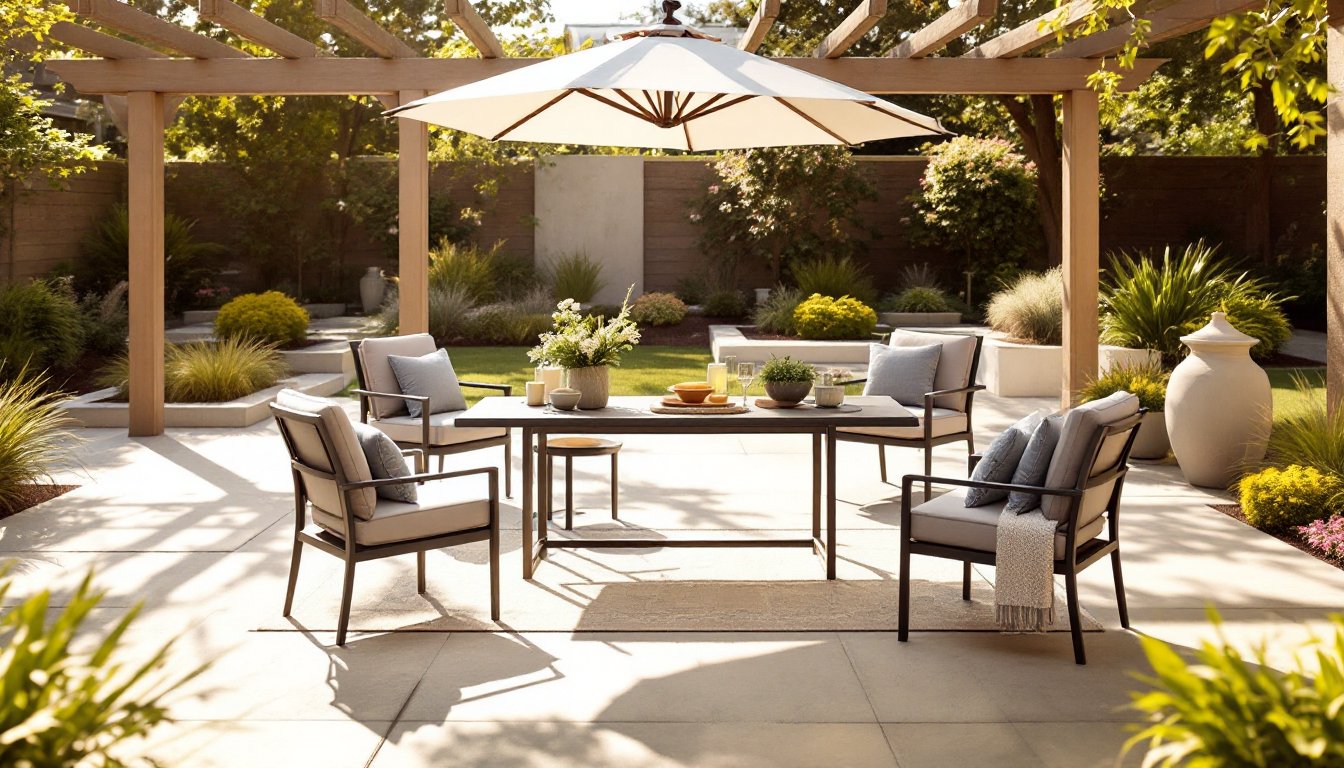
Hanamint furniture works best when coordinated with your patio’s existing materials and landscape character. If your patio is poured concrete, modern Hanamint collections feel at home: add a fire table (often available in Hanamint’s product range), a geometric umbrella base, and accent lighting to complete the zone. Pair cushions in grays, charcoals, or warm neutrals, then layer in outdoor rugs and throw pillows for texture without visual chaos.
For stone or brick patios, traditional Hanamint pieces command the space better. Arrange a dining set near the house for formal entertaining, position lounge chairs toward garden views, and use a side table between seating pieces for beverages or small décor. Consider how Gardenista approaches outdoor living spaces by thinking about sightlines, shade, and how foot traffic flows across the patio.
Buffer harsh afternoon sun with shade cloth, pergolas, or planted screens, Hanamint pieces benefit from partial shade, which extends fabric life and reduces surface temperature on metal. Don’t pack pieces tightly: allow 18–24 inches between chairs for movement and to avoid a cramped appearance. Unclutter the patio floor, Hanamint’s beauty is diminished when surrounded by clutter or competing furniture styles.
Regional inspiration matters too. Southern Living demonstrates how traditional furnishings anchor regional outdoor design, while Hunker explores practical home improvement principles that apply to patio layouts and furniture selection regardless of style preference.
Maintenance and Care Tips for Long-Lasting Results
Hanamint’s durability depends on consistent, light maintenance. Start each season by cleaning cushions with mild soap, water, and a soft-bristled brush: air-dry completely before storing or using. Frames should be wiped down monthly with a damp cloth and dried to prevent dust accumulation. Once or twice yearly, apply a furniture polish designed for aluminum, this protects the powder coat and maintains luster without damaging the finish.
Store cushions indoors during winter if you live in snow climates: even solution-dyed fabrics benefit from a break from extended freezing and UV exposure. If your area sees harsh winters, consider storing entire pieces under a breathable patio furniture cover, not a sealed tarp, which traps moisture and promotes mildew. For coastal or salt-spray environments, rinse frames with fresh water after heavy storms to remove salt deposits that accelerate corrosion.
Inspect fasteners and joint welds annually. Tighten any loose bolts with an appropriate wrench or socket set: don’t over-torque, as this strips threads in cast aluminum. If you notice rust stains on fabric even though proper care, the fastener hardware likely needs upgrading to stainless steel, a worthwhile investment for long-term use. Minor cushion damage (small tears or fading) is repairable through Hanamint dealers or third-party upholstery shops. Powder-coat chips can be touched up with metal-safe paint to prevent rust progression at the damaged spot.
Regular maintenance isn’t burdensome, treat your Hanamint furniture as you would a painted exterior or a deck. Small, preventative efforts extend the life and appearance dramatically compared to neglect followed by crisis restoration.