Outdoor patio furniture takes a beating. Sun, rain, temperature swings, and foot traffic wear on even quality pieces, and cheap cushions fail faster than the furniture itself. The right outdoor patio cushions don’t just add comfort: they’re a practical investment that protects your seating, extends furniture life, and keeps your outdoor living space inviting year-round. Whether you’re furnishing a new patio or replacing worn-out cushions, understanding what separates durable performers from quick failures matters. This guide walks you through the essentials: what to look for, the main cushion types available, and how to keep them lasting through seasons of use.
Table of Contents
ToggleKey Takeaways
- Quality outdoor patio cushions extend furniture life, protect seating from weather damage, and pay for themselves within 5–7 years compared to cheaper alternatives that need replacing every 2–3 years.
- Look for solution-dyed acrylic fabrics with 300+ denier weight, high-density foam cores (2–2.5 lb/cubic foot), and sealed seams to ensure weather resistance and durability in moisture-prone outdoor environments.
- Proper cushion storage in breathable containers, regular dry-brushing, and seasonal rotation prevent mold, mildew, and permanent compression that compromise comfort and safety.
- Different furniture types require different thicknesses: dining cushions need 2–3 inches, lounge cushions 4–5 inches, and bench cushions benefit from reinforced seams at stress points.
- Extend outdoor patio cushion lifespan by protecting from prolonged UV exposure, spot-treating stains immediately with vinegar solutions, and replacing worn foam cores separately rather than entire cushions when covers are still serviceable.
Why Quality Outdoor Cushions Matter for Your Patio
Bad cushions create a domino effect. Thin padding compresses within a season, leaving you sitting on hard frames. Cheap covers absorb water, mildew within weeks, and fade or split under UV exposure. Moisture trapped inside cushions rots the internal structure, making them unusable even if the cover holds up.
Quality outdoor cushions do several jobs at once. They provide ergonomic support during long evenings on the patio. They protect your furniture frame from direct contact with water and debris. And they establish the aesthetic tone of your outdoor space, worn, stained cushions make any patio look neglected, while clean, well-maintained ones invite people to sit and stay.
The upfront cost of better cushions pays for itself. A $150 set of weather-resistant cushions might last 5–7 years with basic care. Cheap alternatives ($40–60 per cushion) often fail within 2–3 years, meaning you’re replacing them twice over the same period. Factor in labor if you’re not doing it yourself, and quality starts looking like economy.
Building code doesn’t apply to cushions, but safety still matters. Outdoor cushions sit in moisture-prone environments. Materials that trap water or grow mold aren’t just uncomfortable, they’re a health hazard for families with allergies or respiratory sensitivities. Breathable, quick-drying materials prevent this entirely.
Key Features to Look for When Choosing Patio Cushions
Weather Resistance and Durability
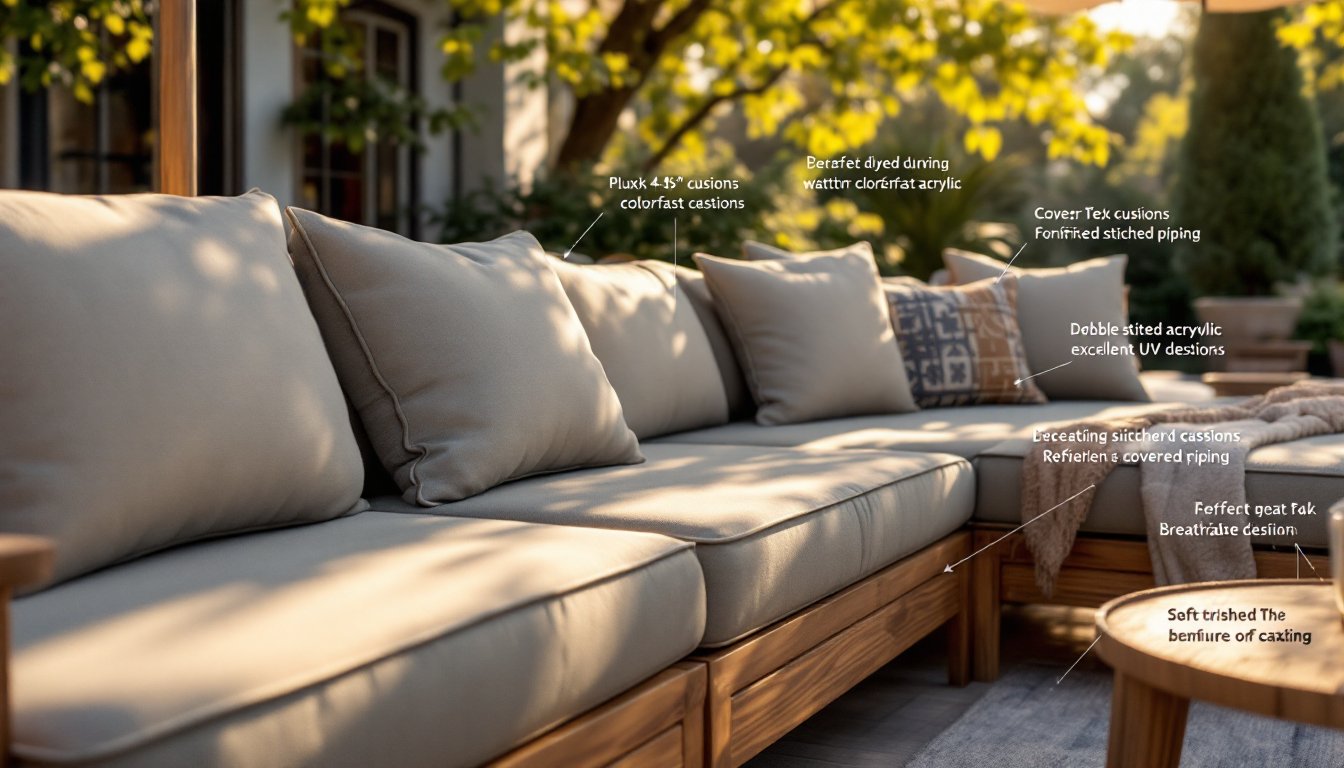
Weather resistance starts with fabric. Look for solution-dyed acrylic or high-performance blends labeled UV-resistant or colorfast. These fibers have dye built into the material itself, not painted on the surface, so fading takes years instead of months.
Olefin and polyester are cheaper alternatives but fade faster and absorb water more readily. If budget is tight and you’re willing to replace cushions every 2–3 years, they work: otherwise, save for acrylic. The fabric weight matters too, 300+ denier indicates a tighter weave that sheds water faster and resists abrasion from sitting and movement.
Water resistance requires both cover and fill. A water-repellent cover is useless if the interior padding soaks up moisture. Look for quick-drying foam cores that shed water or recycled polyester fiber fills that resist moisture absorption. Avoid natural fillings, cotton, down, or wool retain water and mildew quickly outdoors. The seam construction also matters: double-stitched, sealed seams prevent water from wicking into the interior along thread lines.
Zippers are a weak point. Covered zippers (hidden under trim or piping) last longer than exposed ones because they don’t face direct UV and water exposure. Some higher-end cushions use velcro closures instead, which are even more durable.
Comfort and Fill Materials
Cushion comfort comes down to fill density and resilience. High-density foam (around 2–2.5 lb/cubic foot) holds its shape season after season. Low-density foam (under 1.5 lb) feels plush initially but compresses and goes flat within a year or two. Check product specs: reputable brands list foam density.
Thickness varies by use case. Dining cushions need 2–3 inches for support during meals. Lounge chair cushions should be 4–5 inches to distribute weight and reduce pressure points. Bench cushions work at 3–4 inches. Thinner cushions (under 2 inches) feel cheap and don’t provide real support.
Fiber fills (as opposed to foam cores) offer a different feel, softer, less structured, more forgiving for lounging. They compress more readily than foam but can feel luxurious. The trade-off is durability: fiber-fill cushions don’t bounce back as reliably over multiple seasons.
Some manufacturers use a hybrid approach: a foam core for structure topped with fiber for softness. This balances comfort with longevity and is worth the extra cost if you spend significant time on your patio furniture.
Popular Cushion Types and Styles for Different Furniture
Seat cushions (typically 4–5 inches thick, flat or slightly tapered) fit dining chairs and side chairs. They’re the workhorse of patio comfort, widely available and easy to replace. Dimensions vary (usually 16″ × 16″ to 20″ × 20″), so measure your chair seat before buying.
Back cushions add lumbar support and reduce spine fatigue during long conversations or reading sessions. They come in rectangular shapes (10″ × 20″ is common) and attach with ties or velcro to chair frames. Pair them with matching seat cushions for a cohesive look.
Lounge cushions are longer and thicker (4–6 inches), designed for reclining furniture. These are less universally sized, check your furniture’s dimensions carefully. Some have bolster ends to keep you positioned: others are flat. High-end lounge cushions have zipper covers you can wash separately, extending their life.
Bench cushions span multiple seats, providing long runs of seating (often 48″ to 72″ wide). They’re heavier and harder to rotate or replace, so investing in quality here is critical. Look for reinforced piping and reinforced seams at stress points where people shift their weight.
Outdoor cushions for color and pattern are everywhere. Neutral tones (gray, tan, charcoal) hide stains and age well. Bold patterns or bright colors add personality but show dirt more visibly and can fade faster if not UV-treated. Recent testing from Better Homes & Gardens emphasizes the importance of choosing colorfast fabrics regardless of aesthetic choice, color fades uniformly, not in patches, when materials are quality.
Specialty cushions include deep-seat cushions (for deep-framed furniture), floor cushions, and bolster pillows. These fill specific niches but are pricier and less interchangeable. Stick with standard sizes unless your furniture demands otherwise.
Maintenance Tips to Extend Your Cushion Lifespan
Proper storage is the single biggest factor in cushion longevity. During off-season (winter in cold climates, or simply during extended rain), stack cushions in a breathable storage container or cover with a breathable tarp. Airtight plastic bins trap moisture and encourage mildew. Moisture wicking out slowly during storage keeps mold and rot at bay.
Regular cleaning prevents embedded dirt and mold from taking hold. Use a soft brush to dry-brush surface dirt away monthly. For deeper cleaning, mix mild dish soap with warm water, scrub gently with a soft brush, and rinse thoroughly. Let cushions dry completely in sunlight (which also naturally disinfects) before storing or covering. Never machine wash cushions: agitation breaks down fibers and seams.
Spot-treat stains immediately. A mix of equal parts white vinegar and water handles most outdoor stains. Apply, let sit 10–15 minutes, scrub softly, and rinse. For stubborn mold or mildew spots, a diluted bleach solution (1 part bleach to 9 parts water) works, but test on an inconspicuous area first to ensure colorfastness.
Rotate cushions quarterly if they’re used daily. This distributes wear and compression evenly, preventing permanent depressions in high-use areas. Lounge cushions, especially, benefit from rotation since the entire seat compresses unevenly.
Protect from prolonged sun exposure. Even quality UV-resistant fabrics fade if left in direct sun 24/7. If your patio is unshaded, use an umbrella or retractable shade when cushions aren’t in use. A cushion cover (separate from the cushion itself) offers an extra layer of UV protection and extends the life of expensive cushions by 2–3 years. Reviews of tested outdoor cushions like those found on Southern Living highlight product longevity tied directly to maintenance discipline, the best materials can’t compensate for neglect.
Replace inserts, not whole cushions, when possible. Many quality cushions have removable covers and foam cores. Replacing just the worn foam ($30–50) instead of a whole cushion ($100+) saves money while keeping a cover you’ve grown attached to. Check if your cushions support this before buying: premium brands often do, budget options rarely do.
Watch for water pooling. If your patio furniture sits where water collects (under a slight slope or near a downspout), water trapped under cushions leads to mildew and rot. Elevate furniture slightly on furniture pads or ensure drainage beneath cushioned seating.